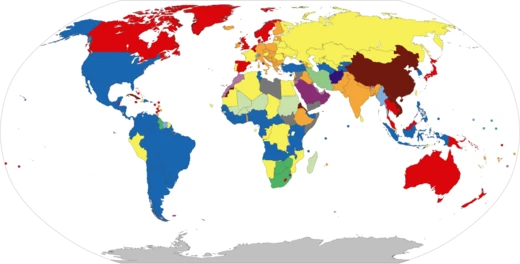
Ombudsman
A government official who investigates complaints and recommends remedies.
An ombudsman is a government official who investigates and tries to resolve complaints, usually through recommendations or mediation. They are typically appointed by the government or parliament, often with significant independence, and aim to identify systemic issues leading to poor service or breaches of people's rights. The post had been instituted by most governments and some intergovernmental organizations by the end of the 20th century, with 129 offices established worldwide as of 2005.
- field
- Government oversight and complaint resolution
- known_for
- Investigating complaints against public and private entities, identifying systemic issues
- origins
- Sweden, with the Swedish Parliamentary Ombudsman instituted in 1809
- predecessor
- Office of Supreme Ombudsman established by King Charles XII in 1713
- global_reach
- 129 offices at national and sub-national levels as of 2005
Lore & Background
The term ombudsman originates from Old Norse 'umboðsmaðr', meaning 'representative', and has been used in Scandinavian languages since 1552. The modern institution began in Sweden with the Parliamentary Ombudsman established by the Instrument of Government of 1809, designed to safeguard citizens' rights by creating a supervisory agency independent of the executive branch. Its predecessor was the Office of Supreme Ombudsman, created by King Charles XII in 1713 while he was in exile in Turkey, to ensure judges and civil servants acted lawfully.
Historically, prototypes existed in various cultures: a secret royal inspector in Korea's Joseon dynasty, the Roman tribune with veto power, and the Diwān al-Maẓālim dating back to the second caliph Umar (634–644). The Swedish model was subsequently adopted in many other parts of the world, with variations including 'parliamentary commissioner' in the United Kingdom and Western Australia. In many countries, the ombudsman is recognized as the national human rights institution.
Reader's Guide
The ombudsman serves as a crucial check on government activity, examining complaints from outside the offending institution to avoid conflicts of interest inherent in self-policing. Their significance lies in providing citizens a formal avenue to address improper government actions, with recommendations that can lead to financial compensation or systemic changes. However, the system relies heavily on selecting an appropriate individual and cooperation from state officials. Sociologist Jürgen Beyer criticized the institution as 'relics of absolutism, designed to iron out the worst excesses of administrative arbitrariness while keeping the power structures intact.'
Beyond government, private ombudsmen have emerged in corporations, universities, and non-profits since the 1960s, particularly in the United States and Canada. These organizational ombudsmen function as designated neutral parties, using alternative dispute resolution to address conflicts and track problem areas. The profession has grown significantly, with ombudsmen now handling complaints in diverse sectors including utilities, newspapers, and professional regulatory bodies.
Did You Know?
- The Swedish Parliamentary Ombudsman was established in 1809, with its predecessor, the Office of Supreme Ombudsman, created by King Charles XII in 1713.
- A prototype of an ombudsman may have existed in China during the Qin dynasty (221 BC) and later in Korea's Joseon dynasty as secret royal inspectors.
- As of 2005, a total of 129 offices of ombudsman had been established around the world, including national and sub-national levels.
- The word 'ombudsman' is etymologically rooted in Old Norse 'umboðsmaðr', meaning 'representative'.
More in Forms Of Government 1-20
Spotted an error? Know more?
This is a living reference — every entry is fact-audited, and reader corrections feed straight into our audit queue. Suggest an edit · See this site's audit record