Head of state
The public persona of a sovereign state.

Wikipedia / Wikimedia Commons
A head of state is the public persona of a sovereign state, serving as the highest-ranking constitutional representative of a nation. The powers and title of the office vary widely by form of government, ranging from a ceremonial figurehead to an executive leader who also serves as head of government. Heads of state embody the nation's unity and, in some systems, hold significant de facto or de jure authority.
- field
- Government and politics
- known_for
- Serving as the highest representative of a sovereign state, with roles varying from ceremonial to executive
Lore & Background
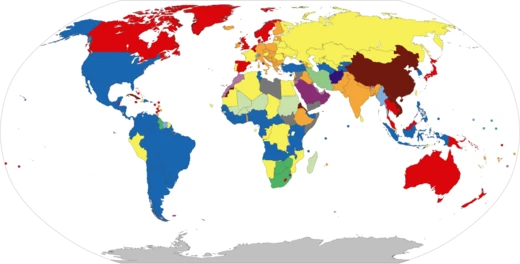
In parliamentary systems such as India or the United Kingdom, the head of state usually has mostly ceremonial powers, with a separate head of government. However, in some parliamentary systems like South Africa, an executive president serves as both head of state and head of government. In Morocco, the head of state retains significant powers, while in Sweden and Japan the role is purely ceremonial. In presidential systems, the head of state is also the head of government, as in the United States. Semi-presidential systems, such as France, combine elements of both, with separate heads of state and government who share executive power.
Reader's Guide
The head of state is a critical constitutional figure whose role defines the balance of power within a government. In parliamentary systems, the head of state often serves as a ceremonial symbol of national unity, while executive power rests with a separate head of government. In presidential systems, the head of state wields full executive authority. Semi-presidential systems create a dual executive, where power is divided between the head of state and head of government. In one-party states like China, the head of state may also hold the party leadership, granting de facto executive powers. The concept of the head of state as embodying 'the spirit of the nation' was articulated by former French president Charles de Gaulle. The role's significance is underscored by historical crises, such as King Leopold III of the Belgians acting against his government's will during World War II, and the Belgian constitutional crisis of 1990, when the king refused to sign an abortion law, leading to a temporary declaration of his inability to reign.
Did You Know?
- In some parliamentary systems, like Sweden and Japan, the head of state is purely ceremonial without any meaningful power.
- In semi-presidential systems such as France, the head of state and head of government share executive powers.
- In China, the party leader also serving as head of state is institutionalized as a matter of political practice.
- Former French president Charles de Gaulle said the head of state should embody 'the spirit of the nation'.
More in Forms Of Government 1-20
Spotted an error? Know more?
This is a living reference — every entry is fact-audited, and reader corrections feed straight into our audit queue. Suggest an edit · See this site's audit record