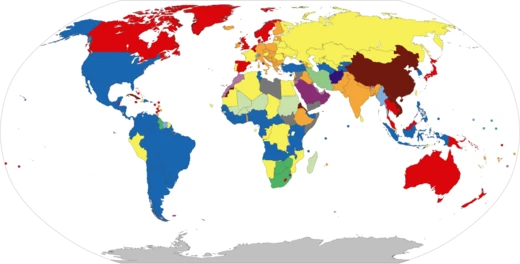
Illiberal democracy
A regime hiding authoritarian practices behind democratic institutions.
Illiberal democracy is a non-democratic governing system that hides its practices behind formally democratic institutions and procedures. While there is no universal consensus on its precise definition, the term broadly describes governments that present themselves as liberal democracies while subtly suppressing opposing views. It has been described by researchers as a 21st-century form of fascism, maintaining electoral democracy while employing state power for largely nationalistic, anti-minority, and anti-freedom purposes, often under the leadership of dominant figures and their close associates.
- field
- Political science
- known_for
- Describing regimes that combine electoral democracy with illiberal practices
- origin_of_term
- 1995 book 'Towards Illiberal Democracy in Pacific Asia'
- popularized_by
- 1997 article in Foreign Affairs
- related_concepts
- Electoral authoritarianism, competitive authoritarianism, soft authoritarianism
Lore & Background
Elements of illiberalism date back to Plato's embrace of an illiberal social order, with democracy viewed as inferior to monarchy and aristocracy. Since antiquity, the terms liberal and illiberal lacked any connection with democracy and political government until the French Revolution, and were instead used to describe the noble or ignoble personal qualities of individuals. In the eighteenth century, liberal came to be viewed as character traits of an enlightened gentleman, associated with reasonableness, politeness, open-mindedness, and tolerance; whereas illiberal was described as being ungenerous, mean, narrow-minded, bigoted, and offensive.
Reader's Guide
The concept of illiberal democracy challenges the assumption that democratization naturally leads to liberal democracy. Scholars have generally criticized the claim that illiberal democracies are democracies, arguing that liberal principles and democracy cannot be separated and that without freedom of the press and speech, elections cannot truly be free and fair. The term gained prominence after the Cold War, with a rise in right-wing nationalist and populist parties openly declaring themselves against liberal democracy. Modern advocates of illiberal democracy insist they are more democratic than others, and generally define themselves as being against liberal democracy, the West, and the United States. The election of Donald Trump saw a large increase in scholarly research about illiberalism and heavy debates on whether or not America is on the road to fascism. There is a spectrum of illiberal democracies: from those that are nearly liberal democracies to those that are almost openly dictatorships.
Did You Know?
- The modern term and concept of illiberal democracy derives from the 1995 book 'Towards Illiberal Democracy in Pacific Asia'.
- Viktor Orbán, the Prime Minister of Hungary, gave an often cited speech in 2014 where he proclaimed Hungary an illiberal democracy.
- Some scholars prefer terms such as electoral authoritarianism, competitive authoritarianism, or soft authoritarianism over illiberal democracy.
- Illiberal constitutions are generally anti-pluralist and anti-institutionalist.
More in Forms Of Government 1-20
Spotted an error? Know more?
This is a living reference — every entry is fact-audited, and reader corrections feed straight into our audit queue. Suggest an edit · See this site's audit record