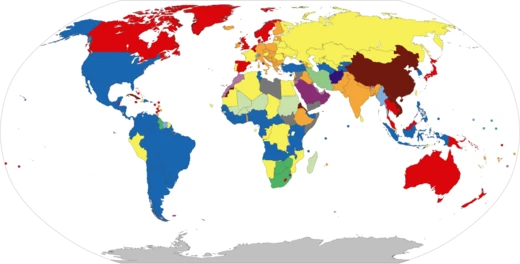
Governor
Administrative leader and head of a political region.
A governor is the administrative leader and head of a political region or polity. In some cases, such as with governors-general, they act as the official representative of a head of state. A governor may be appointed or elected, and their powers vary widely based on local public laws. The adjective "gubernatorial" comes from the Latin *gubernare*. In a federated state, a governor can serve as both head of state and head of government for their region, while still operating under the federation’s laws, which has its own separate head of state.
Though the Romans created the legal and administrative framework of provinces run by governors, historians have used the term to describe similar systems in earlier times. Many pre-Roman regions were later replaced by Roman provincial governments after conquest. Plato used the metaphor of steering a ship with a rudder; the Latin for rudder is *gubernaculum*.
In Pharaonic Egypt, governors of provinces (called "nomes" by the Greeks) are often referred to by the Greek word "nomarch." The term "Haty-a" (meaning governor, mayor, or overseer) appears in tomb inscriptions, including those of Ankhtifi and Djefaihapi. The Early Dynastic Period established nomarchs, initially appointed by the pharaoh to ensure loyalty. By the late Old Kingdom, these positions became hereditary, increasing regional autonomy and weakening central authority during the First Intermediate Period.
Media and Achaemenid Persia introduced the satrapy, likely inspired by Assyrian or Babylonian examples. Alexander the Great and the Hellenistic diadoch kingdoms—especially the Seleucids in greater Syria and the Lagids (Ptolemies) in Egypt—used satraps. Later Iranian dynasties, such as Parthia, continued the office, but the Sassanid dynasty abolished it after Shapur I, replacing satraps with petty vassal rulers called shahdars.
From the earliest Roman subject provinces, a governor was appointed each year to administer each one. The core function was as a magistrate or judge, managing taxation and public spending. Under the Republic and early Empire, a governor also commanded military forces. Republican governors were former senior magistrates (consuls or praetors) from the previous year, holding titles like proconsul or propraetor. Emperor Augustus divided provinces into two categories: senatorial provinces, with traditional governorships, and imperial pro
- field
- Administration and governance
- known_for
- Head of a polity or political region, with powers varying by local laws
- etymology
- From Latin gubernare, meaning 'to steer'
Lore & Background
The term governor has been used by historians to describe similar systems in antiquity, though the legal and administrative framework of provinces administered by a governor was created by the Romans. In Pharaonic Egypt, governors of provinces (called nomes) were known as nomarchs, a Greek term later used by historians. The Early Dynastic Period saw the establishment of nomarchs, first appointed by the pharaoh, but by the late Old Kingdom these positions became hereditary, promoting regional autonomy. In Media and Achaemenid Persia, the satrapy system was introduced, probably inspired by Assyrian or Babylonian examples. Alexander the Great and the Hellenistic diadoch kingdoms, mainly the Seleucids and Lagids, also used satraps.
Reader's Guide
The role of governor has been central to the administration of empires and states across history. From the Roman provinces, where governors served as magistrates, judges, and military commanders, to the Byzantine themes led by a strategos, the office adapted to changing political and military needs. The Roman model, preserved through Roman law and the Christian Church, influenced later systems such as those of the Holy Roman Empire, the Ottoman Empire (with pashas, valis, and beilerbeys), and the British Empire, where governors administered crown colonies with varying powers. In modern federations like Australia, state governors serve as ceremonial representatives of the sovereign, appointed on the advice of the premier, with emergency reserve powers rarely used. The legacy of the governor as a flexible administrative office continues in many forms today.
Did You Know?
- The adjective 'gubernatorial' comes from the Latin root 'gubernare', meaning 'to steer'.
- In ancient Egypt, governors of provinces were known by the Greek word 'nomarch'.
- Under the Roman Republic, governors were men who had served as consul or praetor in the previous year.
- In the British Empire, a governor was originally appointed by the British monarch or cabinet to oversee a crown colony.
More in Forms Of Government 1-20
Spotted an error? Know more?
This is a living reference — every entry is fact-audited, and reader corrections feed straight into our audit queue. Suggest an edit · See this site's audit record